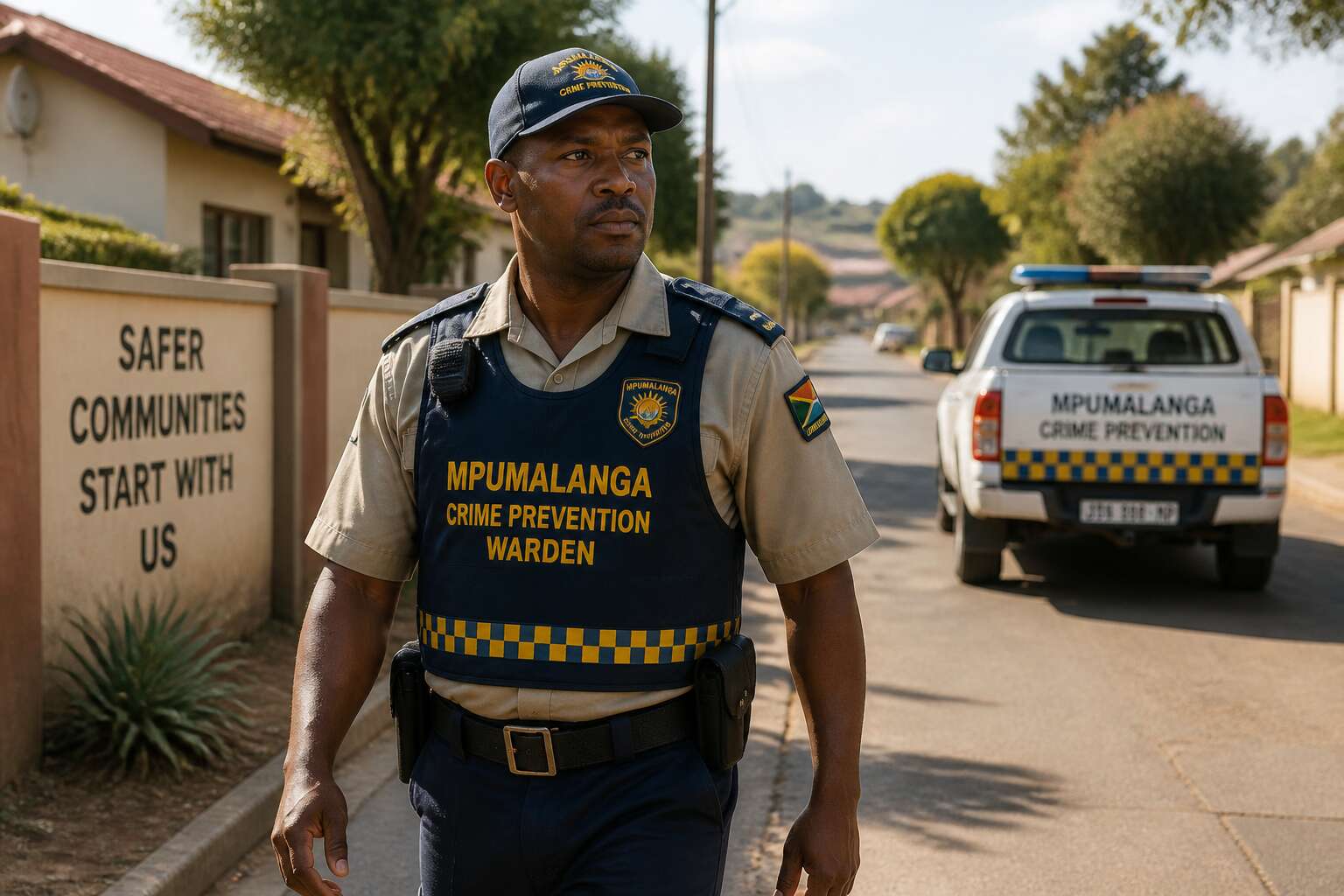
The Role and Mandate of Provincial Safety Wardens
The Mpumalanga crime prevention wardens have become a familiar sight, and honestly, that is a relief. Their mandate is far more nuanced than simply walking the streets. They serve as a visible deterrent, a direct line between communities and the police, and a calming presence in areas where anxiety once ran high. Their primary job is to reclaim public spaces through sheer, consistent visibility.
These wardens operate under a clear directive. They are not police officers, but they are the eyes and ears on the ground. Their core functions include:
– Patrolling high-risk zones to discourage opportunistic crime.
– Gathering community intelligence that is then handed over to the SAPS.
– Acting as the first point of contact for residents who are unsure of official channels.
It is a formidable task. I have seen them burst into action during a dispute, instantly de-escalating a situation before it turned violent. Their mandate bridges the gap between passive observation and official intervention, offering a pragmatic solution to a complex problem. They are proof that safety is a shared responsibility.
Recruitment, Training, and Professional Standards
Recruitment for the mpumalanga crime prevention wardens begins with a simple question: who is willing to stand between danger and the community? The selection process is rigorous. Applicants face physical assessments, psychological evaluations, and interviews that probe their commitment to public safety. It is not an easy path, and that is precisely the point.
Training transforms raw potential into disciplined capability. Recruits spend months learning:
– Conflict de-escalation
– First response tactics
– Legal boundaries of their authority
Their classrooms are real neighbourhoods, not just lecture halls. In my view, this is where character gets tested.
Professional standards hold these wardens to a high bar. A code of conduct governs every interaction. Supervisors conduct regular reviews, and body camera footage is audited. In a province where trust is fragile, accountability is the foundation. The mpumalanga crime prevention wardens are expected to be both protectors and exemplars.
Measuring the Impact on Community Safety
Numbers tell part of the story. But the real gauge of safety is how a mother feels walking home after dark. The mpumalanga crime prevention wardens have shifted that feeling in measurable ways.
Consider what residents report:
- Reduced response times to distress calls
- Greater visibility during peak hours
- Renewed willingness to report incidents
Each metric is a thread in the fabric of community trust. I have spoken to shopkeepers and taxi drivers. They describe a quiet relief, a return of ordinary routines. That is the impact we must measure!
Overcoming Operational Hurdles
Nobody prepares you for the silence between patrols. The Mpumalanga crime prevention wardens know this intimately, that suspended moment when radio static replaces human voices and the bushveld seems to hold its breath.
Operational hurdles rarely announce themselves. Sometimes they are broken vehicles on rutted roads. Other times they are community members who refuse to share information because they fear retaliation. We have learned to work around these barriers through patience and consistent presence.
There are days when morale fractures under the weight of it all. Our resilience depends on small routines:
– Debriefing after every shift, even the quiet ones
– Rotating patrol routes so no single officer carries the same danger repeatedly
– Checking in on each other’s mental state before heading home
Most of the time, the real battle is against fatigue. Wardens push through long shifts with limited backup, and the psychological toll compounds quietly. We keep going because we remember why we started.
Future Directions and Strategic Development
Mpumalanga is charting a course that other provinces will likely follow. The mpumalanga crime prevention wardens are evolving from a visible deterrent into a deeply embedded community asset. Strategic development now prioritises intelligence led deployment, where data streams from community members direct every patrol.
The next horizon involves specialised units. I have watched these wardens adapt with a kind of quiet resolve, shifting from reactive sweeps to proactive preservation. Their training calendar has expanded to include cyber literacy, crisis negotiation, and ecological crime detection.
- Establishing 24 hour rural command posts across the Lowveld
- Recruiting local youth as junior observation scouts
- Integrating with municipal disaster response frameworks
For the mpumalanga crime prevention wardens, the future arrives in shifts. It is a schedule, a strategy, and a solemn duty.




0 Comments