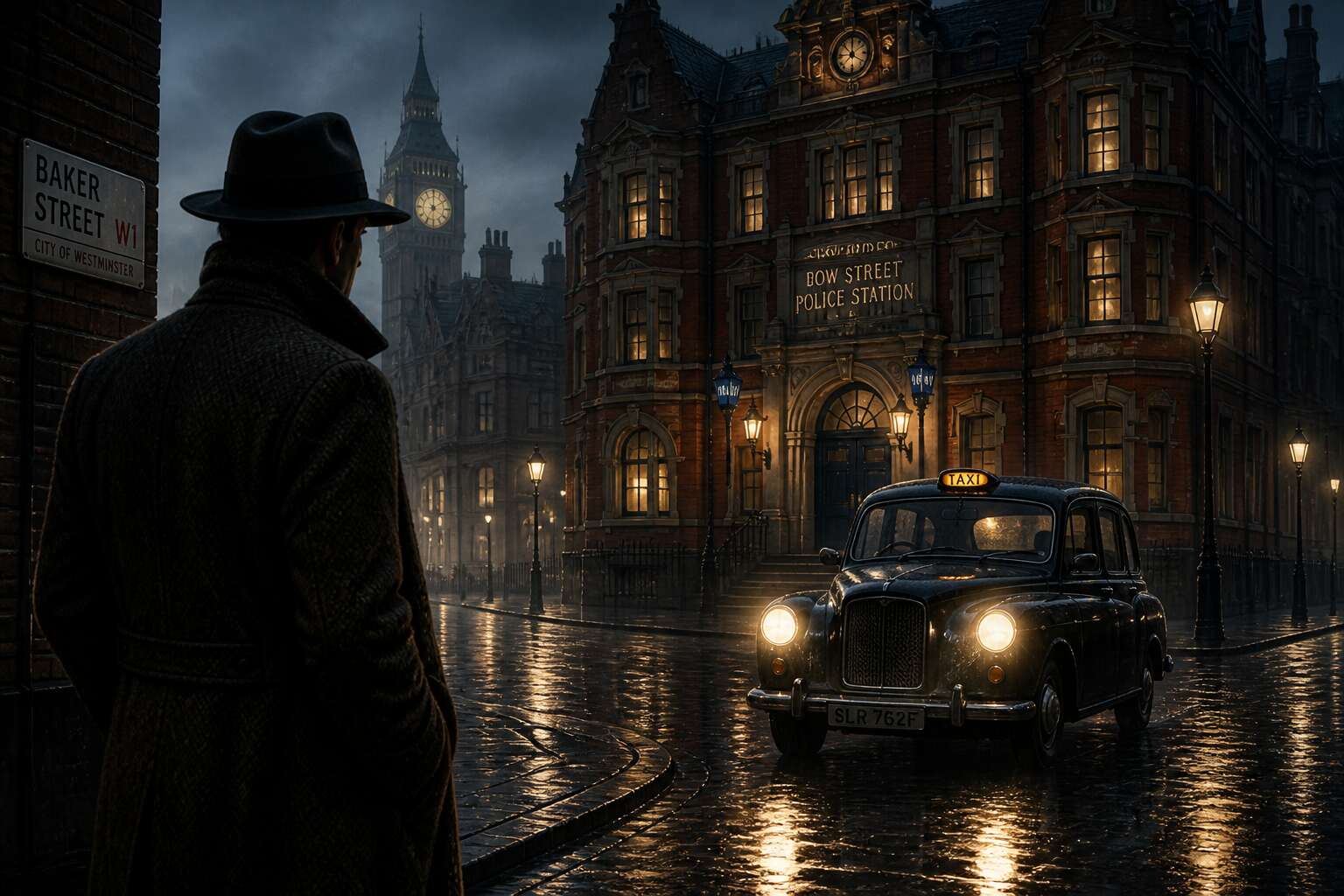
The Evolution of UK Crime Dramas on Screen
From Cozy Mysteries to Gritty Realism
From the thatched hamlets of vintage Agatha Christie adaptations to the brutal high rises of contemporary thrillers, the british crime series has undergone a chilling metamorphosis. Early television favoured drawing room puzzles, genteel suspects, and detectives who never perspired. The modern landscape rejects such comforts entirely.
Today’s storytellers drag audiences through corrupt institutions, forensic laboratories, and the moral wreckage left behind by systemic failure. This shift mirrors a public appetite for honesty over escapism.
Consider the hallmarks:
– Traumatised, fallible protagonists rather than eccentric geniuses
– Slow burn investigations that resist neat resolutions
– Gritty production design that makes urban decay a character itself
These techniques create a visceral intimacy. The british crime series no longer offers reassurance. It offers confrontation, and the viewer must decide what to do with the unease.
The Rise of the Police Procedural
The police procedural replaced intuition with process, and I find that shift remarkable. The modern british crime series places the investigator inside a vast, flawed apparatus. The procedure becomes the plot itself!
Several elements define this form:
- The incident room as a microcosm of institutional pressure
- The forensic timeline that contradicts witness testimony
- The professional rivalry that obscures evidence
Consider how shows like Prime Suspect or Line of Duty stage their drama in the interrogation room. Power shifts with every pause. The viewer learns to read the silences as carefully as the dialogue. This approach demands patience, and it rewards attention.
Modern Psychological Thrillers
A single glance can hold more menace than a full confession. I have watched the modern psychological thriller turn the british crime series inward, placing the human mind at the centre of the investigation.
The drama now lives in the space between what characters say and what they actually remember. Memory distorts. Trauma returns. The murderer is no longer an outsider. The murderer is a neighbour, a colleague, a family member whose private history has become lethal.
Key narrative techniques define this evolution:
- The unreliable narrator who rewrites their own story mid-episode
- The victim whose past shapes the present crime
- The investigator whose personal wounds mirror the case
The power of this approach rests in restraint. The most unsettling moment in any modern british crime series is often the one where nothing happens at all. The silence, not the scream, is what lingers!
The Influence of Nordic Noir
The arrival of ‘The Killing’ in 2011 changed the pacing of the british crime series. Its successors swapped rapid suspects for lingering dread. Nordic Noir influenced structure rather than setting. British writers learned to slow down. Audiences were asked to accept ambiguity. Three consequences became visible:
- Muted colour palettes replaced the slick sheen of earlier procedurals
- Dialogue shrank, and silence carried more narrative weight
- Moral certainty disappeared from the final frame
These choices did not erase British identity. They deepened it, producing dramas where the ordinary holds lasting menace.
Iconic Detectives and Investigators
The Eccentric Genius Archetype
There is a particular joy in watching a detective whose brilliance comes with a heavy dose of oddity. In many british crime series, the eccentric genius archetype turns the investigation into a battle between extraordinary perception and stubborn social awkwardness. These characters often speak in cryptic fragments and notice details no one else registers.
Take Sherlock Holmes in his modern iteration. His mind operates like a machine, but his humanity remains fractured. He solves cases through logic alone, yet requires a companion to translate him to the world. This pattern repeats across the genre, from the obsessive professor to the misanthropic inspector.
- They ignore social rules.
- They hold unconventional moral codes.
- They treat evidence as a puzzle, not a burden.
What makes them compelling is their fragility. They are not superhuman. Their genius often comes with addictions, isolation, or a refusal to accept praise. That tension between brilliance and brokenness anchors many british crime series and keeps audiences returning.
Haunted and Flawed Leading Officers
There is something quietly devastating about a detective who carries their own wreckage into every investigation. The haunted officer is a staple of the british crime series. These are the ones who have made a mess of their personal lives, who take every failure home with them, who treat the job as penance rather than puzzle. DCI Tom Mathias in “Unforgotten” and DI Lindsay Denton in”Line of Duty” let their scars shape their moral compass without becoming the story. They are driven by a need for order because they have seen what chaos does to a person.
What separates them is their insistence on accountability, especially their own. They apologise when wrong, second-guess themselves, wake at 3 a.m. replaying interview transcripts. Their competence is constant, but so is their ache. This does not make them weak; it makes them rare. The british crime series has known that vulnerability can be a form of strength.
Unlikely Partnerships and Double Acts
The enduring pull of a british crime series often comes from two detectives who should not tolerate each other. Think of Hardy and Miller in Broadchurch, or Morse and Lewis in the later years. Their partnerships depend on contradictions. One rushes in, the other hesitates. One talks to fill silence, the other savours it. I find these pairings more honest than any romance.
These double acts are not about friendship. They are about mutual reliance, grudging and honest. Each knows the other’s weaknesses and decides to work around them. The unspoken rules matter more than an apology.
- George Gently and John Bacchus, whose resentment slowly becomes respect
- Vera Stanhope and Joe Ashworth, one impatient, the other patient
A british crime series succeeds when the audience roots for this mismatched pair to solve the case, not to become friends. That tension is the real investigation.
The Rise of Female-Led Investigations
In 1991, Prime Suspect introduced Detective Superintendent Jane Tennison, and the british crime series gained a new kind of detective. She worked in a world that did not want her, solved cases anyway, and never apologised for her ambition.
Female-led investigations now define the genre’s emotional core. Catherine Cawood in Happy Valley carries trauma without confession. Cassie Stuart in Unforgotten listens more than she speaks. What I admire most about these women is their refusal to perform heroics. Their methods demand patience, not brute force. They remain professional while everything around them falls apart.
Key titles include:
- Prime Suspect
- Happy Valley
- Unforgotten
- Scott & Bailey
Each proves gender matters less than persistence. That is their shared signature.
Ensemble Casts and Team Dynamics
The team around the detective matters as much as the detective in a british crime series. Procedurals like Line of Duty and Broadchurch depend on tension between departments. Officers withhold information. Loyalties shift during interviews.
A good ensemble creates friction. Every person in the MIT carries suspicion. Every word gets weighed. The best british crime series treat teamwork as a battlefield rather than a support system. I have watched this play out repeatedly. The dynamics vary:
- Broadchurch uses a reluctant, fractured partnership.
- Shetland relies on quiet familiarity.
- Luther presents a unit that contains a man out of control.
Policing is never an individual sport. The lone detective is a myth. The team delivers the truth, even when each member stumbles toward it.
Settings That Shape the Mood
Urban Landscapes and Council Estates
Nobody escapes the estate. That is the first rule of british crime series set in urban landscapes. The concrete walkways connect every flat, every doorway, every blind corner. This geography breeds a particular kind of paranoia. The camera captures the graffiti, the boarded windows. The atmosphere is set before anyone speaks.
Council estates are not interchangeable backdrops. Each one carries a distinct history. The brutalist high-rises from the 1960s, the squat maisonettes, the underpasses that trap sound and light. These spaces alter how characters move, how they hide, how they confront one another. I have walked these walkways, and the layout’s logic is unmistakable.
Key mood-shaping elements include:
- The dead-end stairwell that forces confrontation
- The estate courtyard where every window is a potential audience
- The concrete underpass that deadens footsteps
- The parked cars that provide cover for surveillance
These architectural details push the narrative of british crime series toward grim outcomes. The setting does not wait for the plot. It drives it!
The Claustrophobia of Small Villages
In any british crime series, the idyllic village accumulates more corpses per square kilometre than most active conflict zones. The local constable, the vicar, the woman behind the post office counter, they all keep watch. Nobody slips away unnoticed.
The claustrophobia emerges from constrained geography. One pub, one narrow lane, a village green where every face carries decades of memory. The space itself generates the tension.
- The pub where conversations halt when you walk in
- The church fete where alibis get quietly confirmed or destroyed
- The village hall meeting where old grudges resurface as testimony
These recurring elements turn the village into the antagonist. It smothers with politeness. In a british crime series, the charm is the weapon.
Coastal Noir and Seaside Secrets
Winter transforms a seaside town into something else entirely. The promenades empty, the arcades board up, and the wind carries salt spray across the car parks. In a british crime series, these settings generate a particular unease. The tourist season leaves no trace, only litter and lost things.
What strikes me about coastal noir is its reliance on exposure. A body on the shingle beach at low tide. A witness who saw something from a clifftop path. The tide removes footprints and alibis. There is no cover on a coastline. Detectives work with the horizon at their backs and the cold in their faces.
Recurring locations include:
– Victorian piers in perpetual decay
– Harbour offices harbouring their own secrets
– Boarded-up bed and breakfasts with cloudy windows
– Lifeboat stations where everyone knows everyone’s failings
The sea determines what the investigation can know. The best british crime series respect that limit.
Historical Period Settings
A 1940s detective cannot run DNA. He cannot triangulate a phone signal. He has paper files, witnesses, and instinct. That limitation is what makes historical period settings so powerful in a british crime series. The past strips away modern shortcuts and forces the investigation back to human behaviour.
Costume departments build the surface. Corsets, ration books, and blackout curtains. But the real work happens in the gaps between evidence. Wartime secrecy gives suspects cover. Post-war austerity gives them motive. A period setting changes the rules of deception in ways a modern thriller cannot match. I never tire of watching that unfold!
- Telegrams replace texts, so messages take hours
- Fingerprint records sit in filing cabinets, not databases
- Reputations matter more than alibis in a close community
Strip away the historical gloss, and only the detective and the evidence remain. The best period british crime series treat history as a working part of the puzzle.
The Global Appeal of British Storytelling
Why Short Seasons Win Audiences
The average british crime series runs just six episodes. That brevity is a strategic advantage. Audiences across the globe gravitate toward stories that respect their time. A tight arc allows writers to maintain tension without padding. Every scene serves the plot. This format has elevated british crime series into a cultural export many viewers actively seek.
Short seasons also reduce creative fatigue. Writers can outline a complete story before production begins. They avoid filler subplots and meandering character arcs. The result feels urgent and precise. In an era of endless streaming options, that clarity wins loyalty.
The Impact of Streaming Platforms
Streaming platforms now deliver a british crime series to South African screens within hours of its UK premiere. This immediacy changes how audiences discover stories. Viewers no longer wait for broadcast schedules or DVD imports. They binge entire seasons over a weekend. South African viewers have embraced this format with particular enthusiasm.
The global appeal stems from a particular kind of restraint. British storytelling trusts the audience to follow subtle cues. It does not overexplain motives or spell out every twist. Streaming algorithms reward that confidence. They surface these shows to viewers who crave narrative density over spectacle.
- Regional accents and local slang remain intact
- Cultural references stay unapologetically British
- Storylines avoid international pandering
That authenticity becomes the selling point. Platforms recognise that global audiences want specificity, not homogenisation. A british crime series set in Manchester or Cornwall offers a texture that generic productions cannot replicate. Streaming has turned this specificity into a worldwide commodity. The result is a genre that feels both foreign and familiar.
Cross-Cultural Remakes and Adaptations
The appeal of a british crime series often survives translation. Producers in Scandinavia, France, and South Korea have remade these stories, placing murder and motive into their own landscapes. The structure remains, but the cultural texture shifts. What fascinates me is how the core tension adapts without losing its grip.
Local versions of a british crime series replace rain-soaked streets with Cape Town’s wind or Seoul’s neon. The procedural logic stays intact. That logic, the patient discovery of secrets, proves more portable than any accent.
Why do these adaptations work? Because the best stories hinge on human failing, not geography:
- The detective’s private wound translates directly.
- The community’s silence needs no translation.
- The final twist lands the same in any language.
This is why global audiences keep returning to the original version as the benchmark, even as remakes claim their own territory.
The Export of British Acting Talent
British acting talent exports as reliably as the stories themselves. When a british crime series travels, the cast often determines whether it lands. Performers trained in UK theatre carry a precision that translates across borders.
Producers in Hollywood, Europe, and Africa recruit them for good reason. They work fast, they dig into flaws, and they never beg for sympathy. The result is a performance that feels earned rather than manufactured.
Global audiences respond to this. The actor’s discipline becomes the bridge between a British script and a South African living room. Whether the lead is a grieving detective or a quiet suspect, the acting carries the story.
A british crime series might offer the puzzle, but the talent makes it matter.
The Role of Regional Accents and Dialogue
Put a Scouser and a Devonian in the same interrogation room and the real drama starts. Regional accents in a british crime series do the work before anyone admits anything. They reveal birthplace, class, and allegiance. A clipped Home Counties vowel sounds like authority. A drawn-out West Country drawl suggests stubbornness. Global audiences pick up on that without subtitles.
The dialogue stays lean. A detective snaps ‘Right then’ and the entire mood pivots. That economy of language is a big part of the global appeal of British storytelling. Foreign viewers fill the gaps themselves. The accents carry the nuance, and the words stay punchy. It is a collaboration between the script and the viewer’s own instincts.
Subgenres and Stylistic Trends
Dark Academia Meets Crime
The cloistered world of British academia has become an unlikely crucible for murder. Dark academia meets crime when ivy-covered institutions hide secrets beneath their scholarly prestige. This subgenre thrives on the tension between intellectual pursuit and moral decay, where libraries become crime scenes and lectures mask vendettas. Watching these british crime series feels like stepping into a gothic lecture hall, each clue tucked inside a rare manuscript or a whispered rivalry.
What distinguishes this trend is its focus on knowledge as both weapon and weakness. The setting itself drives the plot, from cobbled campuses to candlelit archives. Consider the recurring elements that define the style:
- Obsessive academics who weaponise their expertise
- Ancient traditions clashing with modern investigation
- Elite social circles that close ranks against outsiders
These stories often abandon forensic detail for psychological labyrinths. The detective, frequently a visiting outsider, must decode institutional jargon to uncover the truth. For viewers, the appeal lies in seeing brilliant minds unravel under pressure, a refreshing twist on the conventional chase. British crime series have embraced this niche with remarkable flair, proving that the pursuit of knowledge can be as dangerous as any street corner.
Comedy-Drama Hybrids
Not every british crime series must be relentlessly sombre. Comedy-drama hybrids allow grief and wit to occupy the same scene. A prime example is the 2024 series ‘Ludwig’, where a reclusive crossword setter impersonates his missing twin brother, a detective, and solves cases with lateral thinking and deadpan charm. This tonal fusion makes each reveal feel earned.
The best versions treat humour as a survival instinct, not a punchline. They find laughter in the spaces between interviews, in the absurdity of bureaucracy, and in the small indignities of the job. Some common markers of the form:
- Comic actors in serious roles
- Punchy dialogue that undercuts tension
- Jokes fade when the danger sharpens
The deadpan delivery of a baffled pathologist or the dry retort of a junior officer keeps a british crime series anchored in recognisable behaviour. I would argue this makes the comedy feel true, not a detour.
True Crime Inspired Narratives
The collision between dramatisation and documented reality shapes a distinct strand of the modern british crime series. These narratives borrow from inquest records, trial transcripts, and newspaper archives, reconstructing events with a forensic attention to detail. The result feels less like entertainment and more like an act of witness.
Some productions adopt a quasi-documentary visual language, with handheld cameras and natural light. Others use direct addresses to camera or interstitial text to remind viewers that these horrors actually happened. This creates an uncomfortable intimacy, a sense that the audience is complicit in revisiting trauma.
What distinguishes this form:
- The use of real case files as structural scaffolding
- A focus on procedural accuracy over dramatic convenience
- The ethical weight of portraying living survivors or grieving families
The most affecting examples resist simple answers. They sit with uncertainty, allowing the messiness of actual investigations to remain unresolved. In doing so, the british crime series becomes a memorial, a warning, and a reckoning. It asks us to look, then to remember. Then to look away, because we cannot.
Supernatural and Thriller Crossovers
Watching british crime series evolve from hard realism to something stranger! The supernatural crossover moves beyond genre. It’s a stylistic trend where thriller tension meets folk horror. A detective relies on an unreliable witness who sees the dead. A murder inquiry stalls until a tarot reader offers a cryptic clue. We are left uncertain whether these are real or projections of grief. I prefer productions that refuse to explain the eerie elements. The uncanny exposes the psychological damage of the crime itself. What marks the best examples:
- The supernatural never rescues the plot; it deepens the mystery.
- Horror is rooted in the local landscape: rural woods, brick terraces, abandoned mills.
- Doubt remains. Investigators never get a clean answer.
These crossovers require trust. The british crime series that balance both allow terror to breathe alongside procedure. The result is unease that lingers after the credits end.
Underrated Gems and Hidden Treasures
Forgotten Favorites of the 1990s
While millions obsessed over Cracker, a quieter breed of 1990s television rotted away in archives. Band of Gold, a british crime series about sex workers in Bradford, never softened its edges. It showed murder, poverty and police indifference without a single reassuring beat. Watching it today feels like an excavation!
Then there is The Governor, starring Janet McTeer as a prison chief battling corruption. Its refusal to reward the viewer with closure makes it uncomfortable viewing. Few shows captured institutional decay with such patient dread. These forgotten productions remind us that the 1990s offered more than fame. They offered psychological grit, and we lost something when they disappeared.
Regional Gems Outside London
For every drama set in a Thames-side penthouse, several quiet productions flourish in places like Northumberland or the Welsh valleys. The british crime series canon is richer than its London-centric reputation suggests. Vera uses the bleak Northumberland coast as a character in itself. Hidden, a Welsh-language thriller, rewards patient viewers with a genuinely unsettling atmosphere.
These regional gems often enjoy devoted followings but rarely cross into mainstream conversation. Their storytelling feels closer to the communities they depict. Viewers notice a different pace. The accents are thicker, the humour drier, and the crimes feel rooted in specific economic realities.
- The Bay, set in Morecambe, explores coastal poverty through the eyes of a family liaison officer.
- Scott & Bailey, based in Manchester, offers a grounded take on detective work without the usual glamour.
For South African audiences accustomed to polished international productions, this authenticity is part of the appeal. The best british crime series outside London do not beg for your attention. They simply earn it.
Emerging Showrunners to Watch
Sixty percent of buzzworthy television now travels by word of mouth, yet the quietest corners of the genre hold the sharpest knives. The true connoisseur knows that the best british crime series often avoid the billboard. They lurk in the streaming back catalogues, waiting for viewers who prefer their mysteries with a side of social discomfort.
The current wave of emerging showrunners understands this appetite. They are not rehashing the inspector with a troubled past. Instead, they dismantle the procedural format from within, using the genre to probe class anxiety and institutional rot. For example, the creator of Rekognition crafts a narrative about a facial recognition analyst who discovers her own face in a cold case file. It is a premise that feels less like a plot and more like a mirror held up to surveillance culture.
These new voices often cut their teeth on smaller productions before securing a full series order. They bring a distinct, unsettling grammar to the screen that feels refreshingly unpolished. Consider the work of director Priya Sharma, whose limited series Gravel uses the Cambridgeshire fens to explore grief with a chilling, quiet menace. The showrunner’s eye for the mundane, the awkward family dinner, the petty office feud, grounds the extraordinary violence in a recognisable reality.
For the discerning viewer, certain titles have already achieved cult status among the initiated. Seek out these hidden treasures:
– The Long Peace, a slow burn where a village’s annual commemoration is interrupted by a discovery that reveals a fabricated history.
– Fallow, set within the competitive world of agricultural fairs, where a judge’s rivalry turns fatal.
– Sea Glass, a two-part drama where the protagonist is adrift after her sister’s disappearance, told from a distinctly unreliable perspective.
The emerging showrunners are far bolder than the establishment often allows. They are not afraid to let the silence stretch for a beat too long or to leave a character’s motivation ambiguous until the final frame. Their protagonists are not inherently likeable. They are prickly, rude, and utterly human.
These series require a patient investment. The payoff is a richer, more singular experience. The british crime series landscape is currently at its most fertile, not in the big-budget productions, but in the idiosyncratic visions of these new auteurs. They are redefining what the genre can say about modern Britain, one unsettling close-up at a time.




0 Comments