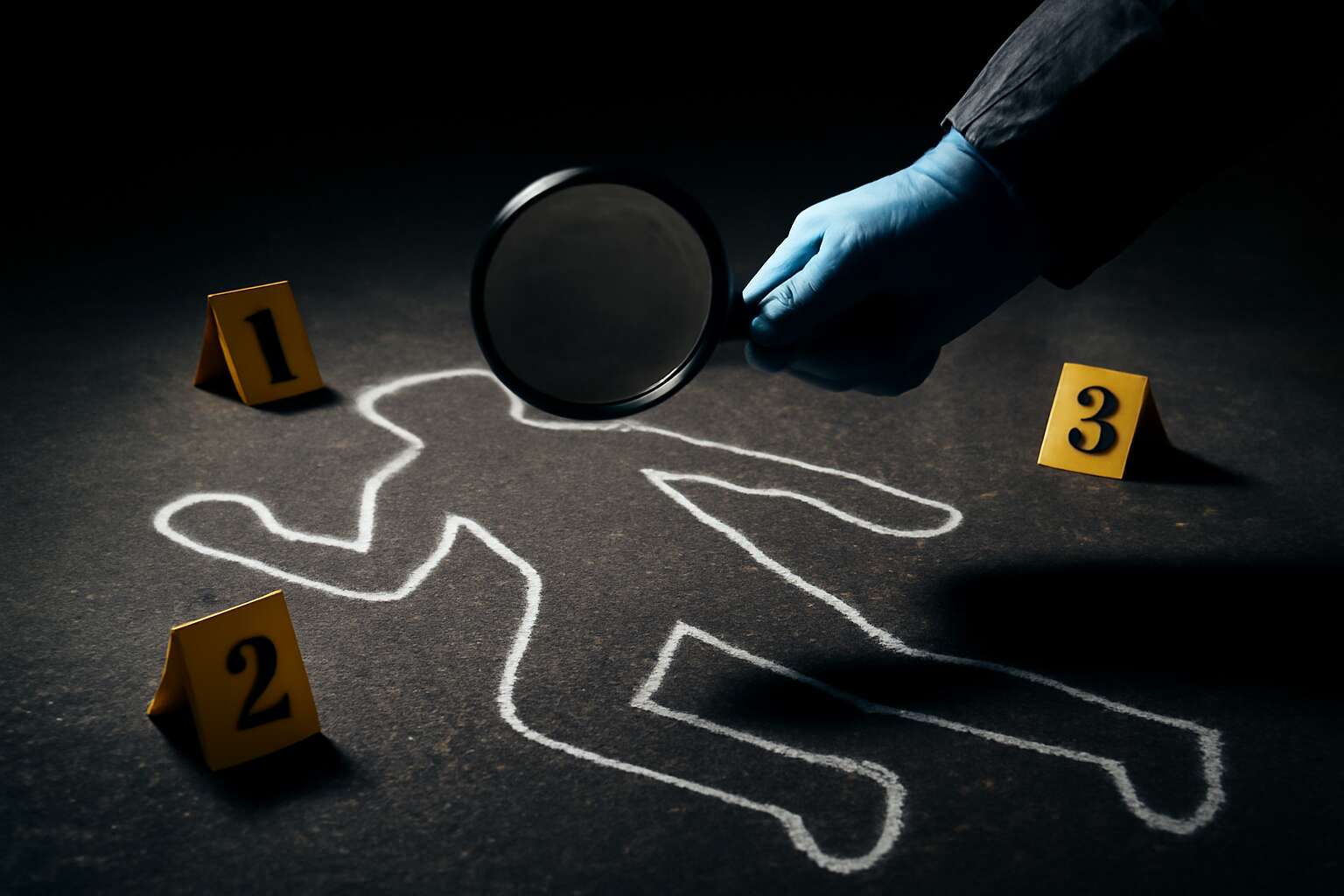
Foundations of Crime Scene Investigation
Key Principles of Crime Scene Management
In the first hour, a crime scene either yields its secrets or dissolves them into static. I’ve watched that window decide the story! The foundations of crime scene investigation demand discipline: meticulous observation, precise documentation, and unwavering scene control. For South Africa, the stakes are personal and public, and the narrative the scene writes will shape the course of any crime and investigation.
- Scene security and controlled access
- Systematic documentation and photography
- Preservation of physical and digital evidence
- Chain of custody and accountability
- Interdisciplinary collaboration across teams
Foundations extend into crime scene management: rapid risk assessment, safe handling of fragile items, and disciplined handoffs to the lab. When these elements align, the integrity of the process remains intact—an essential verdict in any crime and investigation.
Evidence Identification and Documentation
Across live scenes, a single hour can tilt the balance between truth and doubt. The clock demands precision: identify fragile traces, photograph with purpose, and preserve context before the scene wears away, leaving only whispers of what happened.
Foundations of evidence identification and documentation rest on disciplined observation and method. A compact checklist helps teams hold memory and meaning:
- Forensic photography with scale, angles, and timestamping
- Sequential labeling that mirrors the scene’s narrative
- Secure metadata and chain-of-custody notes
In South Africa, these elements underpin crime and investigation, ensuring that every tag, photo, and log reinforces the integrity of the inquiry.
Standard Operating Procedures in Crime Scene Investigations
“Time is the crime scene’s most elusive witness,” a veteran investigator once said. In South Africa, Foundations of Crime Scene Investigation Standard Operating Procedures shape every heartbeat of the process—securing the perimeter, preserving context, and guiding careful movement so truth remains intact in the realm of crime and investigation.
- Clear role delineation and command flow
- Strict scene access controls and log maintenance
- Standardized evidence handling and documentation rituals
- Ongoing training and interagency drills
In South Africa, these SOPs align with legal mandates and lab protocols, binding investigators, technicians, and prosecutors in a reliable chain of custody and rapid, accurate reporting that sustains justice.
Chain of Custody and Handling Evidence
“Truth travels on a secure chain,” a veteran investigator offers, and in South Africa this maxim threads through every crime and investigation. Foundations of the chain of custody begin at the perimeter, where personnel are monitored, seals are intact, and context is safeguarded by deliberate, careful movement.
Evidence handling follows a disciplined rhythm. Every item is assigned a unique identifier, packaged securely, and logged from hand to hand with precise timestamps.
- Initial collection and sealing
- Transfer documentation and chain of custody notes
- Storage in a controlled facility with restricted access
Thus the integrity of the investigation remains intact across interagency collaboration, guiding rapid, accurate reporting and sustaining justice.
Initial Response and Scene Safety
Every crime scene holds a fragile truth, written in minutes, not warrants. A veteran investigator once said, “Safety first writes the testimony.” In South Africa, the initial response and scene safety shape outcomes—whether clues endure and whether crime and investigation stay credible.
Key actions include:
- Immediate hazard assessment
- Perimeter establishment and access control
- Personal safety and PPE enforcement
- Minimal disturbance and rapid, careful documentation
With calm authority, responders balance urgency with restraint, guarding lives and traces to tell the real story across diverse communities.
Forensic Science in Modern Investigations
Crime Scene Reconstruction Techniques
In the hustle of South Africa’s streets, a single well-documented reconstruction can turn a cold file into a living pursuit. Forensic science in modern investigations helps turn chaotic scenes into precise narratives, guiding the crime and investigation teams toward truth. It’s where science meets storytelling, and the stakes are real.
Techniques like trajectory analysis, pattern interpretation, and digital modeling help peel back layers of a scene without sensationalism, preserving the integrity of the evidence while revealing sequence and cause. 3D crime scene reconstruction, photogrammetry, and video forensics bring distant clues into a shared visual language.
- 3D scene mapping and photogrammetry
- Bloodstain pattern interpretation
- Trajectory and impact analysis
- Digital data integration and virtual reconstructions
When these tools are applied with care to evidence, the craft of crime and investigation finds clarity.
Laboratory Analysis: From DNA to Trace Evidence
In modern South African laboratories, DNA analysis can shorten investigative timelines by up to half, turning tangled clues into a cohesive truth. Forensic science in modern investigations translates whispers of evidence into decisive findings. From DNA profiling to trace evidence, the lab becomes a compass, guiding crime and investigation teams toward clarity with quiet authority.
- DNA profiling and sequencing
- Trace evidence analysis (fibers, soils, residues)
- Forensic chemistry and toxicology
These tools fuse into a narrative as rigorous as it is human—calibrated thresholds, validated protocols, and transparent reporting that keeps pace with truth. The data speaks for crime and investigation with unwavering honesty.
Digital Forensics: Recovering Data from Devices
In South Africa, devices rarely lie. Digital forensics turns screen glare into testimony—stitching timelines from logs, metadata, and hidden cloud traces. The discipline translates whispers of data into decisive leads, guiding investigators with quiet precision through a legal labyrinth.
- Encrypted messages
- Deleted but recoverable files
- Metadata and geolocation
When the digital and the physical converge, the narrative of a case—drawn in circuits and footprints—becomes a human story about accountability, justice, and the fragile balance of privacy in a modern society. This is the heartbeat of crime and investigation.
Forensic Analysis in Special Cases: Ballistics and Toxicology
In modern crime and investigation, the most telling signatures hide in plain sight—the arc of a bullet, the subtle hints of a poison, the quiet glow of a trace left behind. Forensic science in special cases translates physics and chemistry into prosecutable certainty. Ballistics decodes firearm use—trajectory, range, and the unique striations that fingerprint a weapon. Toxicology reveals substances that linger in the body, from street drugs to environmental toxins.
Their work sits at the crossroads of lab benches and life stories, where data meets duty:
- Ballistics: trajectory reconstruction, firearm comparison, wound ballistics.
- Toxicology: screening, confirmatory testing, metabolic profiling.
Together, these analyses stitch evidence into a human narrative that guides justice through the courtroom.
Quality Assurance and Accreditation in Forensics
Quality assurance and accreditation in forensics are the quiet guardians of truth in crime and investigation. A single validated process can tilt a verdict toward certainty and away from doubt. In South Africa, labs align with ISO/IEC 17025 and SANAS accreditation, weaving reliability into every analysis, report, and courtroom moment.
Quality systems demand traceability, method validation, and rigorous staff competency. They breathe life into data, making results reproducible and auditable across shifts and analysts.
- External proficiency testing to benchmark performance
- Document control and audit trails that prove decisions
- Regular instrument calibration and maintenance to sustain accuracy
These measures translate into defendable results that withstand scrutiny in the courtroom, reinforcing the integrity of crime and investigation.
Investigation Techniques and Case Management
Witness and Suspect Interviewing Strategies
Within crime and investigation, the room often reveals more than the crime itself—the way a witness lingers on a detail, or how a suspect weighs a truth against a lie! In South Africa’s layered communities, interviews must blend empathy with precision, balancing memory, motive, and consequence.
Effective strategies hinge on structured case management and thoughtful interviewing: cultivating rapport, noting inconsistencies, and prioritizing leads with care.
- Establish rapport through active listening and respectful prompts
- Use open-ended questions and cognitive techniques to reduce bias
- Document responses consistently to preserve reliability
Ultimately, witness and suspect interviews in this field require humility and rigor, a quiet chorus of truth-seeking that respects memory and law.
Surveillance and Field Operations
A quiet thread can unravel the loudest case. In South Africa’s diverse precincts, surveillance and field operations demand more than grit; they require humane precision and a strategic eye. Case management hinges on clear goals, risk-aware deployment, and disciplined documentation.
In practice, the following pillars shape reliable surveillance and field operations:
- Real-time risk assessment and officer safety protocols
- Coordinated deployment across teams and assets
- Consistent incident reporting to preserve chain of custody
- Integrated debriefs that feed back into the case file
Humility sits at the heart of this work—surveillance teaches restraint, meticulous verification, and ethical presence. This blend sustains momentum in crime and in investigation across South Africa’s communities, turning scattered observations into a cohesive, humane pursuit of truth.
Case File Organization and Timeline Development
More than half of investigations stall on paperwork—a sobering stat that proves a tidy file matters as much as a tidy suspect. In South Africa, the realm of crime and investigation, sharp case file organization and precise timeline development keep momentum alive, even when the clues refuse to cooperate.
Investigation techniques hinge on disciplined data capture and a brisk, cross-checking mindset. Build a living case file with consistent metadata, dated notes, and auditable changes. The following elements make the workflow sing:
- Standardized case-file architecture that captures essential metadata
- Real-time timeline governance to provide situational awareness
- Cross-agency metadata tagging to preserve context and searchability
Timeline development isn’t a luxury—it’s a map. Align interviews, executed searches, and evidence integration along a chronological spine, then calibrate with periodic debriefs to ensure nothing slips through the cracks.
Geographic Profiling and Link Analysis
In South Africa, the grim truth is that more than half of investigations stall on paperwork, yet sharp investigators prove the file isn’t a dead weight—it’s a compass. In the realm of crime and investigation, geographic profiling and link analysis turn scattered clues into a narrative, revealing routes, hotspots, and hidden networks!
Geographic profiling uses spatial footprints to predict where an offender lives, frequents, or strikes next. Harness these elements:
- Spatial-temporal mapping
- Anchor-point and habit-pattern analysis
- Cross-jurisdictional data fusion
Link analysis stitches people, places, and objects into a conversation that grows smarter as more data flows in. Combine this with disciplined case management and a clear audit trail, and the investigation moves with momentum rather than padding.
Resource Planning and Coordination with Agencies
In South Africa, more than half of investigations stall on paperwork—a stubborn truth that can derail justice, but sharp teams turn that dead weight into momentum. In the world of crime and investigation, technique and tempo walk hand in hand: meticulous data capture, targeted interviews, and the art of sequencing leads keep the narrative moving.
Resource planning and coordination across agencies are not afterthoughts; they are the backbone. When case files are scheduled, communications are standardized, and joint tasking is explicit, momentum replaces padding.
- Inter-agency data sharing protocols that respect privacy and legality
- Joint investigations calendars and alert systems
- Centralised case files with an unbroken audit trail
The result is a resilient workflow that scales with complexity and keeps the crime and investigation moving forward.
Criminal Justice Process and Investigation Outcomes
Arrest, Charging, and Pretrial Procedures
Across crime and investigation in South Africa, the clock is a relentless judge—delays between arrest and disposition routinely stretch into months, shaping outcomes as much as evidence itself. The system treads between urgent action and fair process, balancing safety, rights, and the material truth that must hold up in court.
Arrest, charging, and pretrial steps unfold with procedural precision and stark implications for victims and communities.
- Arrest by police and formal charging by the prosecutor.
- First appearance, bail or remand decisions, and potential provisional release.
- Pretrial disclosures, case management, and plea negotiations that shape trial readiness.
This is the moral resonance of the criminal justice process: every decision—arrest, charging, bail, or pretrial ruling—carries consequences for justice, truth, and public trust in South Africa.
Evidence Standards for Prosecution
In South Africa, justice travels at a cautious pace—the arc from arrest to disposition models outcomes as surely as evidence itself! Within crime and investigation, the clock never stops, and delays test victims, communities, and truth.
Criminal justice process and investigation outcomes hinge on evidence standards for prosecution: how disclosures are timed, what is considered admissible, and how the burden of proof shapes each decision. When these elements align, trials reflect the material truth and safeguard rights, safety, and public trust.
Trial Preparation and Case Presentation
Criminal justice moves in a measured, almost tactile rhythm, where the stage is the courtroom and the script is built from credibility and consequence. In South Africa, trial preparation and case presentation hinge on a precise synthesis of facts, motive, and opportunity—a narrative that must endure cross-examination and memory’s frailty. The crime and investigation enterprise thrives or falters by how clearly the prosecution connects the dots, how disclosures are managed, and how the burden of proof translates into courtroom bearing and outcomes.
- Case theory alignment across evidence
- Witness coordination and credibility prep
- Exhibit integrity, inventory, and presentation order
- Disclosures, admissibility, and pretrial motions
A crisp, courtroom-ready narrative translates into credibility for the prosecution and fairness for the accused, a balance the public expects from crime and investigation.
Plea Bargaining and Alternative Resolutions
Justice moves with a patient rhythm, shaping outcomes before the gavel falls. In South Africa’s criminal justice process, outcomes hinge on how the state and defense navigate plea bargaining and alternative resolutions, choosing paths that spare communities the trauma of lengthy trials. In crime and investigation landscape, these choices decide who bears the burden and how harm is acknowledged. “Justice is a process, not a verdict,” a veteran prosecutor told me.
Considerations that guide these routes include:
- Plea bargaining agreements that delineate facts, admissions, and consequences.
- Diversion programs for first-time or low-risk offenders to curb harm.
- Restorative justice circles that bring victims, communities, and offenders together to repair harm.
From years spent in rural communities, I’ve seen how such resolutions preserve dignity and futures, letting families heal without the cost of a long trial. They demand careful case theory alignment and steadfast integrity from every officer, lawyer, and judge involved.
Appeals and Post-Conviction Reviews
“Justice is a process, not a verdict,” a veteran prosecutor told me. In South Africa, the criminal justice process extends into appeals and post-conviction reviews, capable of reshaping outcomes after the gavel falls. In the crime and investigation landscape, these avenues guard truth, offering correction when law or procedure falters and renewing public trust.
- Grounds for appeal: legal error, misdirection, or improper admission or exclusion of evidence.
- Post-conviction relief: new evidence, concerns about representation, or allegations of misconduct.
- Impact on victims and the community: notification, restitution, and ongoing safeguards for public safety.
Careful case theory alignment and unwavering integrity from every officer, lawyer, and judge keep these mechanisms trustworthy; they turn potential setbacks into opportunities for restoration and accountability within the system.
Future Trends in Crime Investigation
Emerging Technologies in Investigation: AI, IoT, and Data Analytics
In the realm of crime and investigation, recent stats show digital forensics cases in SA rising by 28% over the past two years, a sign that trouble evolves with technology.
Emerging technologies such as AI, the Internet of Things, and data analytics are not gadgets but partners in how we understand complex investigations.
- AI-driven pattern detection across complex datasets
- IoT-enabled sensors that feed real-time scene data
- Analytics linking disparate tips, leads, and records
This trio reshapes investigations by expanding real-time visibility and predictive insights, while forcing a recalibration of ethics and privacy within the framework of modern investigations.
The horizon remains unsettled, yet the work continues!
Ethics, Privacy, and Civil Liberties in Modern Investigations
Across South Africa, digital forensics cases rose 28% in two years, a vivid reminder that crime and investigation now play out across data streams as much as crime scenes. Future trends place ethics, privacy, and civil liberties at the center of method, not as afterthoughts. Expect governance that favors transparency, oversight, and accountability, especially where AI, IoT, and analytics touch sensitive information.
- Data minimization and purpose limitation
- Independent oversight and auditing
- Privacy-preserving techniques and de-identification
In practice, this means protective impact assessments, consent-aware workflows, and legible audit trails that reassure the public without stifling investigative creativity. The balance remains delicate, but the prize is trustworthy crime and investigation capabilities that respect citizens while solving cases faster.
Open Source Intelligence and Public Data Use
In crime and investigation, Open Source Intelligence is the frontline today, not a flashy side quest. Early data suggests OSINT-led leads shorten case timelines by as much as 40%, a stat that would make any investigator grin.
South African agencies are embracing Public Data Use with governance baked in—transparent processes, independent audits, and privacy-preserving workflows that keep sensitive details safe while widening the information net.
- Public data sources and registries
- OSINT verification and cross-check protocols
- Open data dashboards with clear provenance
These trends promise smarter intelligence, not sneaky shortcuts, and they underscore the need for accuracy, context, and accountability in the broader landscape across the region.
Training, Talent, and Best Practices for Investigators
In South Africa, early indicators show modular, scenario-based training can cut onboarding time by up to 25%, accelerating readiness for crime and investigation in real-time challenges!
- Modular micro-credentials and cross-agency fellowships improve talent mobility
- High-fidelity simulations replicate critical incident dynamics and decision pressures
- Curricula weave ethics, privacy, and civil liberties into daily practice
- Auditable, transparent talent development tracks ensure accountability and trust
Beyond credentials, organisations will prioritise mentoring, diverse recruitment, and continuous learning, ensuring investigators stay adaptable in a rapidly shifting landscape.
Collaboration Across Jurisdictions and International Investigation
Across borders, collaborative investigations move at the speed of data. Early pilots report case-resolution times shrinking by up to 30%, a haunting promise for crime and investigation teams facing relentless, global threats. The night speaks in encrypted channels, and the dawn answers with joint resolve!
Future trends hinge on interoperable platforms, harmonized procedures, and shared training networks that stitch agencies and nations into a single, patient watch. A quiet revolution blooms in data exchange, privacy safeguards, and legal agility—readiness without reckless speed.
- Real-time data sharing with privacy safeguards governed by clear rules
- Joint international exercises and secondment programs across jurisdictions
- Unified digital forensics labs and standardized open-source intelligence protocols
In this evolving theatre, trust and ethics remain the steely backbone, guiding cross-border work through Southern African borders and beyond. The result is a more luminous, if shadowed, investigative landscape.



0 Comments