Understanding Forensic Scene Analysis
Key Concepts in Scene Safety
From the edge of a crime scene, truth leans on patient evidence. In South Africa’s cities and shadowed townships, the first hour can crown a case or crumble it. Crime scene investigation begins with restraint, honoring whispers on the floor until dawn reveals its name.
- Perimeter integrity as a conceptual cornerstone.
- Hazard awareness to preserve context.
- Documentation and chain-of-custody as spine.
In my experience, lighting and the temper of air decide what survives. Forensic scene analysis hinges on surfaces, humidity, and temperature, and on memory and record-keeping harmonizing to reveal truth beyond instruments. The scene speaks; I listen.
Initial Scene Assessment and Securing the Area
Understanding what you’re walking into starts with a mindful breath and a sharp eye. In crime scene investigation, the first minutes craft the narrative that later fills the file. The initial assessment sets the tone—lighting, temperature, and air currents whisper louder than instruments.
Securing the area demands restraint and direction. Define the boundary, limit movement, and keep essential personnel within. Log observations and item flow with discreet precision. Read the room for moisture, drafts, and temperature quirks that threaten fragile traces.
- Draw a tight boundary and restrict access to essentials
- Record who handles what, when, and with which identifier
- Note ambient conditions that might alter evidence
Surface quirks and faint residues become testimony when treated with care. The analyst’s gaze, sharpened by field reality, cross-checks memory against a disciplined log. The result is a coherent thread through a chaotic space.
Roles and Responsibilities of the Forensic Team
‘The truth doesn’t yell; it leaves fingerprints,’ murmurs a veteran investigator, and the room shifts to a rhythm. The hush beneath the lights is where the cast gathers—the forensic chorus that shapes what follows. In crime scene investigation, each role casts its own shadow, guiding the narrative toward truth. Roles are not merely titles; they are lanterns, turning the maze of evidence into a coherent map that speaks with undeniable voice.
Key players include:
- Lead Investigator — scene command and strategy
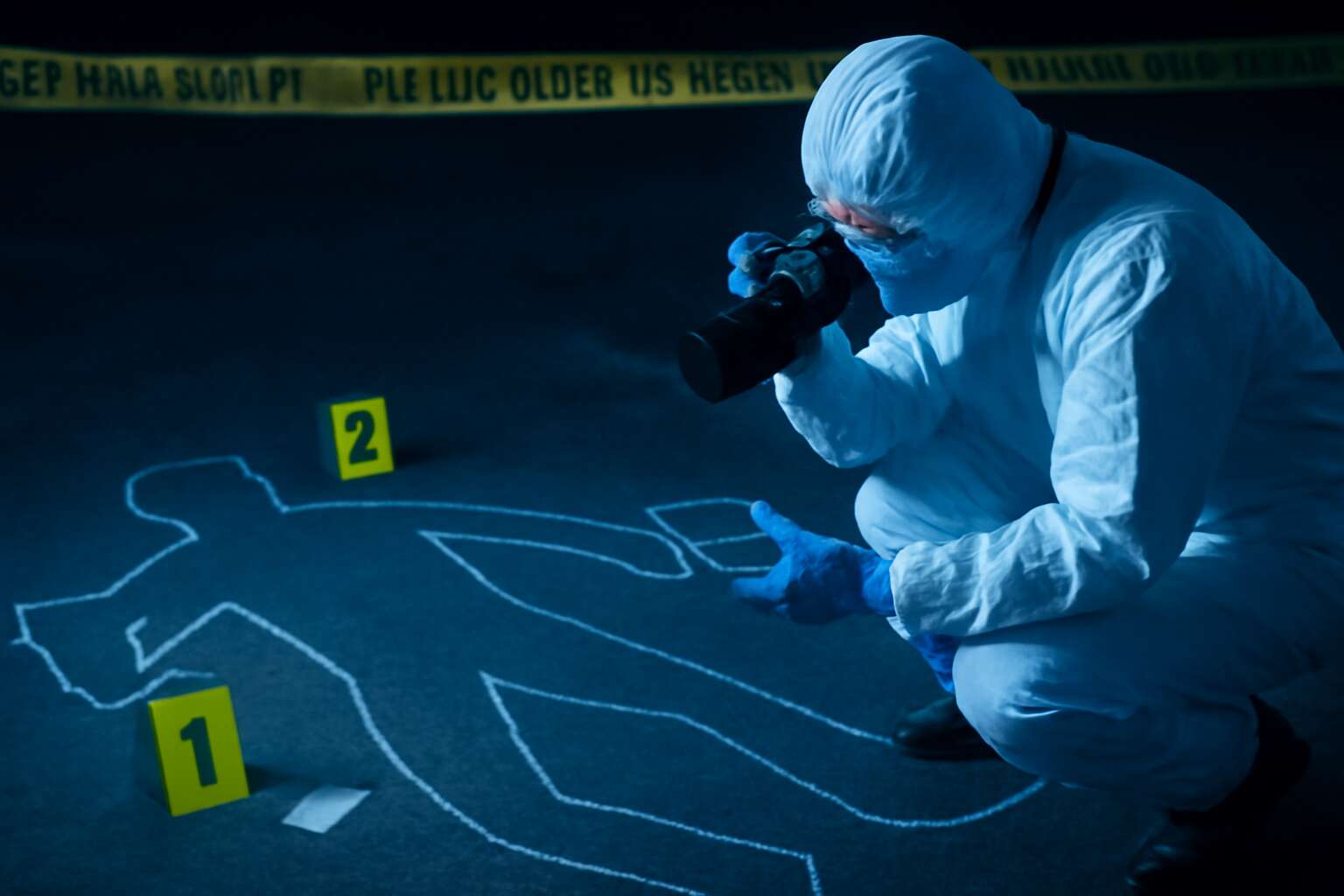
- Scene Photographer — evidence capture and visual record
- Evidence Custodian — custody and flow of items
- Forensic Analyst — specialist testing and interpretation
In this macabre ballet, the forensic team coordinates with quiet authority—photographs, notes, tracings, and tests align like constellations. The chain of custody travels with every item; the lab becomes a translator for the room’s whispers, and final report emerges as a loyal witness to South Africa’s legal landscape.
Timeline of a Typical Scene Analysis
Time is the most intimate witness in crime scene investigation; a veteran once whispered, “Time reveals what shouting cannot.” On arrival, we choreograph a quiet ballet—commands, cameras, and careful notes shaping what the room holds as truth. The clock ticks, and the perimeter is guarded not to hide, but to protect memory.
Documentation unfolds as a living map: photographs, field notes, and staggered measurements weave a coherent sketch of events without ever oversharing the private drama behind them. In crime scene investigation, every fragment is a syllable, each trace a sentence that the mind must translate before it forgets.
Evidence travels with custody, lab translators decode its whispers, and analysis breathes interpretation into the material. The final report then stands as a witness to South Africa’s legal landscape, a testament to where truth and procedure finally align.
Evidence Collection and Preservation
Photographing and Documentation Protocols
Evidence speaks when words fail, a maxim etched into the practice of crime scene investigation. In South Africa’s complex landscapes, the earliest moments bias memory toward truth when handled with care. Every thread of evidence carries light, and timing matters more than rumor.
- Secure containers and tamper-evident packaging
- Maintain an unbroken chain of custody
- Photograph evidence before collection and document surroundings
Evidence collection and preservation hinge on meticulous packaging, labeling, and an unbroken chain of custody. Photographs should precede handling, fingerprints lifted with minimal contact, and swab samples tracked with rigorous logs.
In every crime scene investigation, photographing and documentation demand disciplined rigor: high-resolution imagery, scale references, and thorough scene notes that translate the room’s quiet testimony into a readable archive. The aim is a transparent record that future analysts can trust without ambiguity.
Evidence Packaging, Labeling, and Chain of Custody
Evidence collection and preservation hinge on disciplined packaging, precise labeling, and a clean chain of custody. In South Africa’s diverse scenes—dusty farms, urban sprawl, or rugged veld—secure containers and tamper‑evident packaging safeguard fragile traces until they can be analyzed. Memory fades; integrity endures.
Evidence must be packaged to prevent contamination or loss, with clear labeling and a rigorous log of movement. Consider these core elements:
- Dedicated containment to safeguard trace materials
- Clear labeling with case identifiers and item descriptions
- Comprehensive custody records detailing movements, handlers, and transfers
In a crime scene investigation, preserving the chain of custody is your first defense against doubt. Every handoff becomes a quiet pledge to truth, and logs—physical and digital—map the journey from scene to lab with care.
Preservation Techniques and Contamination Control
Truth travels fastest when contamination is thwarted. In the crucible of a crime scene investigation, preservation begins with deliberate restraint: sealed containers, sterile swabs, and a minimal footprint. Trace materials demand controlled environments—no wind or veld dust upsetting fragile fibers, residues, or fingerprints. Preservation techniques become quiet acts of faith, keeping integrity intact until analysis can begin.
- Dedicated containment and PPE shield samples from casual contact
- Controlled transfer and minimal handling prevent cross‑contamination
- Immediate documentation and secure storage preserve material integrity
From scene to lab, every transfer is a ritual of restraint. Meticulous documentation—time stamps, condition notes, and secure transport—bolsters the narrative, ensuring the investigation remains credible in the eyes of courts and colleagues alike.
Handling DNA and Trace Evidence
Evidence whispers in the quiet hours of a crime scene investigation, where a single hair or a smear of residue can tilt a verdict. “Evidence never lies; it waits for the right hands,” a seasoned examiner likes to remind us. The discipline is simple: preserve what matters, and let the science speak for itself in a country like South Africa where every lead could change a life.
- Non-contact transfer to protect DNA and trace material
- Dedicated tools and controlled environments prevent cross‑contamination
- Clear, auditable records and secure transport preserve integrity
From scene to lab, the quiet choreography of handling DNA and trace evidence sustains a credible story for courts and colleagues.
Subsurface and Scene Reconstruction Methods
Subsurface traces sketch a quiet map of events long after the clash of voices has faded across South Africa. In crime scene investigation, technicians deploy non-destructive probes to glimpse what lies beneath, from disturbed soil pockets to submerged impressions, all while preserving the original chaos as evidence.
- Geophysical surveys (ground-penetrating radar and magnetometry) to reveal hidden disturbances.
- Targeted coring and soil sampling with tamper‑evident protocols.
- 3D reconstruction through laser scanning and calibrated photogrammetry to reproduce the spatial narrative.
Subsurface insights and precise reconstruction keep the story intact, guiding investigators’ interpretations within the broader discipline of the field.
Laboratory Analysis and Interpretation
Analytical Approaches in Forensic Chemistry and Toxicology
In South Africa, forensic laboratories juggle thousands of samples each year, where precise chemistry turns ink and evidence into truth. In the theatre of crime scene investigation, this is the moment when data becomes decision, and every result carries weight.
Laboratory analysis and interpretation in forensic chemistry and toxicology demand discipline and imagination. Chromatography and mass spectrometry disentangle complex mixtures; spectroscopy reads the faint whispers of a trace; immunoassays offer rapid screens. Each result is anchored by calibration curves, controls, and reference standards, with uncertainty openly acknowledged as part of the craft.
Key analytical approaches include:
- Gas chromatography–mass spectrometry (GC-MS)
- Liquid chromatography–tandem mass spectrometry (LC-MS/MS)
- Immunoassay screening and confirmatory tests
Interpretation is not merely matching a peak to a compound; it weaves certainty into narrative, mindful of matrix effects and case-specific questions. The laboratory’s voice supports the bigger picture of the investigation, translating data into credible testimony and safe conclusions.
DNA Analysis: Extraction, Profiling, and Interpretation
DNA holds the quiet weight in crime scene investigation, where a single genetic profile can unlock a case. Extraction begins with meticulous lysis and purification to maximize DNA yield while limiting inhibitors. Profiling maps the profile through STR analysis, producing a reproducible fingerprint of the sample. Interpretation weighs statistics against the forensic context to separate true signals from noise and to set boundaries for testimony.
Steps typically include:
- Extraction: clean, contamination-aware recovery
- Profiling: STR-based genetic fingerprints
- Interpretation: statistical evaluation and court-ready reporting
Pattern Evidence: Ballistics, Tool Marks, and Impressions
“A single striation can unveil the entire case,” they say from the shadowed labs of forensic halls. In the lab’s quiet frost, ballistic analysis and pattern interpretation coax a story from lead and steel. Understanding projectile behavior, rifling impressions, and muzzle signatures helps reconstruct a trajectory and confirm suspect tools. I’ve watched monitors glow as evidence speaks—crisp, deliberate, and maddeningly silent—yielding clues that can crack a case in the dark hours of a crime scene investigation.
- Ballistics: matching firearm-related marks, caliber, and rifling characteristics to a suspect weapon
- Tool marks: striation patterns and indentation analysis that link tools to specific marks
- Impressions: three-dimensional casts of footprints, impressions in soft substrates, and tire treads to situational context
Interpretation follows, weighing statistics against context and local firearms culture to produce court-ready conclusions that resonate with South Africa’s detectives and courts.
Integration of Evidence: Case Linking and Statistical Reasoning
Across the hush of the lab, analysis becomes a language that turns fog into fact. In the current of data, a single trace can spell a broader truth, a quiet thread guiding any crime scene investigation. “The truth wears numbers like a veil,” a forensic director whispered, and I’ve watched veils lift when context and chemistry align.
Interpretation is the art of linking cases through statistics, not merely collecting signals but weighing them against the night’s prose—what happened, where, and with which tools. Case linking and statistical reasoning burn as twin lanterns, guiding judges toward a shared understanding.
- Probability updates fuse prior knowledge with new data
- Cross-scene coherence confirms events, not merely connects
- Discrepancy resolution keeps narratives honest in court
From the shadows of the lab to the benches of the court, this integration sustains the arc of justice in South Africa.
Legal, Ethical, and Operational Considerations
Admissibility Standards: Daubert, Frye, and Related Tests
Legal gatekeepers stand at the threshold of the crime scene investigation in South Africa, where science must endure the court’s scrutiny. Daubert, Frye, and related tests shape admissibility—demanding testable methods, known error rates, and transparent reasoning that the judge can audit, even as the truth flickers in the margins.
Ethical vigilance keeps bias and overreach at bay; meticulous chain of custody, timely, accurate reporting, and contamination control are non-negotiable. Operationally, the team documents every step, cross-checks conclusions, and sets conclusions on provable, reproducible footing rather than rumor or conjecture.
- Daubert: testability and known error rates
- Frye: general acceptance in the field
- Related tests: methodology transparency and peer review
In practice, these standards keep drama out of the courtroom and the crime scene investigation’s truth in the light!
Expert Testimony, Reports, and Court Preparation
Expert testimony can tilt a verdict in a heartbeat. In crime scene investigation work across South Africa, courtroom precision mirrors the lab’s exactness, and every claim must stand up to scrutiny!
Legal, ethical, and operational standards shape every report. Ethics guard against bias; reports must be transparent, reproducible, and backed by proper methodology. Clear statements, precise terminology, and documented uncertainties keep the door open for cross-examination and accountability.
Operationally, preparing for court means presentation as much as analysis. A concise narrative, corroborated by exhibits and timeline checkpoints, travels with the witness. To support the case, assemble:
- Executive summaries of findings
- Demonstratives and visual aids
- Documentation of methodology and limitations
- Exhibit lists and chain-of-custody confirmations
Privacy, Bias, and Procedural Fairness in Investigations
Privacy sits at the heart of crime scene investigation; it is not a nuisance but a guardrail. In South Africa, POPIA frames the handling of personal data, demanding consent where feasible and limiting exposure to what is strictly necessary. The balance is delicate, almost intimate, because memory of the event and the people touched by it must be protected as rigorously as the evidence.
Bias, whether deliberate or incidental, can tilt perception like a held breath. Ethical practice demands disciplined protocols, independent reviews, and transparent reasoning that survives cross-examination. Procedural fairness binds interpretation to evidence, ensuring conclusions remain tethered to fact rather than feeling or pressure.
Operational realities insist on confidentiality, governance, and respectful engagement with communities. Balancing urgency with care, investigators document uncertainties and preserve audit trails, so the pursuit of truth never compromises rights, safety, or the integrity of the process.
Media Communication and Public Safety Messaging
“Clarity in messaging saves lives,” a veteran investigator reminds us. In crime scene investigation, the legal, ethical, and operational terrain demands that communications respect rights, law, and the dignity of those touched by the event. The public deserves accuracy, while investigators safeguard sensitive details that could sway outcomes. South Africa’s framework guides information flow from scene to street, balancing transparency with protection and safety with due process.
- Respect privacy and minimize sensationalism
- Provide factual updates with caveats
- Coordinate with authorities to avoid hindering investigations
Operational messaging must be timely, non-alarmist, and respectful to communities. It serves as shield and beacon—calming speculation while guiding people to safety and reliable information. In South Africa’s diverse landscape, clear language and culturally aware outreach sustain trust and cooperation after a scene becomes part of the public record.



0 Comments